Painting Milo: What Loss Taught Me About Art and Healing
 Soma Mandal Datta
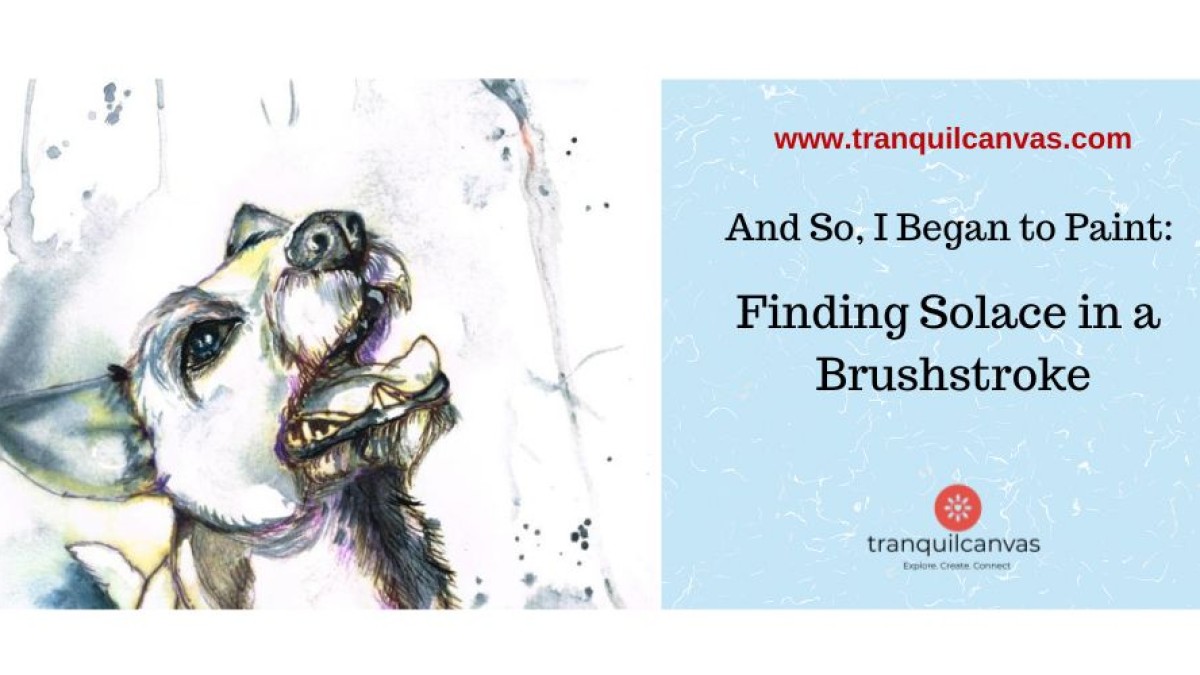
Losing my dog Milo nearly broke me. Painting him saved me. Read how grief led me to art, and why I now teach others to heal through it.
If you've ever picked up a brush during a hard season of life, you already know something I didn't understand until I lived through it myself: art doesn't just live on canvas. Sometimes it's the only thing holding you together.
I want to tell you about Milo, and about the paintings that came from losing him, because it's the truest example I have of why I teach, and why I believe so deeply in the practice we build together in this school. This isn't a story about technique. It's about what happens when you turn to art not to make something beautiful, but to survive something unbearable, and what you find on the other side of that.
Four years earlier, we'd adopted a little dog named Milo, and in that short time, he'd become our whole world. We were a childless couple back then, and without quite realizing it, we'd poured all our unfulfilled hopes of being parents into him. So when we got the news that he had an aggressive form of cancer, and only a few weeks left, it was earth-shattering. Milo wasn't just our dog. He was our son.

While we were still going through testing, I taught myself to sew so I could make him a quilt. The vets kept dropping subtle hints that something sinister was going on in his little body, but I wasn't ready to give in to the fear of losing him. When the diagnosis was finally confirmed, I was devastated, and still, I kept sewing. I finished a second quilt I'd already started for him, because I'd promised him two. He'd loved the first one so much, especially the nightly ritual it came with. My husband would tuck him in, and Milo would pretend to sleep. But the second we climbed into bed ourselves, he'd get up and rearrange it into a nest better suited to his taste. So I kept quilting, and I kept going, watching his little body fight with everything it had.
By the time I finished that quilt, Milo's health had turned into a rollercoaster. He'd have stretches where he seemed completely fine, only to regress without warning. Both his holistic and mainstream vets were stumped. He outlived his prognosis by many months, and there were stretches where he actually seemed healthier than before his diagnosis. Then his health would crash again, and we'd brace ourselves to let him go, only for him to rally right at the pre-euthanasia appointment. Every time, the vets would tell us to wait a little longer. He was too comfortable, too happy, to leave just yet.
Through all of it, I followed every protocol the vets gave us, and I kept showing up for him alongside my doctoral studies, my job, and everything else at home. But carrying all of that alone, with no one to really share the weight with, started to wear me down. Milo's dementia set in, along with new and harder symptoms, and eventually, the vets gently told us this might be the beginning of the end.

I started leaning on a weekly art group to get through it. I'd gone before, but as my studies wound down, it had gotten harder to show up consistently. After Milo's prognosis, though, I needed that room. It gave me somewhere to breathe, even for an hour. I met others there who'd lost their own four-legged babies, to age or illness, and I learned so much just from listening to how they'd found their way through it. One friend in particular became my anchor while Milo was gravely ill. She listened without judgment, exactly when I needed it most, and long after he passed, she was still there helping me through the grief. That little art group became my soft place to land, somewhere I could feel everything I was feeling and not feel alone in it.
Somewhere in the middle of Milo's up-and-down health, while we still believed he had a fighting chance, I decided to start painting for the art markets. I began making tiny artworks of him, even though I had no idea how to paint a pet portrait or work with oils and acrylics. I was learning as I went. But underneath all of it, a harder truth was catching up with me: the treatment wasn't working anymore, and all we could really do was keep him comfortable. That realization hit so hard I could barely function some days.

Painting him became my way of holding on to time, of trying to keep some part of him with me always. I'd photograph him as part of the process, and out of all those photos, only four ever became paintings. I sold every one but one. There was something healing about it, painting him. It kept me close to him even as he was slipping away, and there was something right about sending a version of him, healthy and whole, out into the world.

After Milo got his wings, I started painting pet portraits professionally. Somewhere along the way, I realized painting him hadn't just been about immortalizing him. It had been how I grieved, and how I slowly learned to let go. I know I'll never fully get over losing him, but I'm hoping, someday, I'll learn to live alongside that loss. And knowing his paintings are out there in the world, that's a real comfort to my heart.

Years before any of this, a therapist had suggested I pick up a hobby for my mental health, and that's actually how I first found my way back to art. But it wasn't until Milo got sick, and in the months after he was gone, that I really understood how powerful painting could be. There's real evidence that painting has therapeutic benefits, for the brain and for our stress levels, and I felt that firsthand. But just as meaningful was the community I found along the way, friends who understood exactly the kind of pain I was carrying, because they'd carried it too.
Those connections, even the ones that didn't last, helped carry me through one of the hardest chapters of my life and toward something like healing. I loved Milo so much that I never stopped to wonder whether I could learn a new medium or paint a subject I'd never tried. The need to express what I was feeling was bigger than any fear or hesitation, and somewhere in that process, I found healing, and a whole new purpose I hadn't expected.

Art has this incredible way of reaching the parts of us that words just can't get to. Whatever you're carrying right now, grief, stress, any kind of emotional weight, picking up a brush, a pencil, or even craft supplies can become so much more than a hobby. It can be a lifeline.
That's what I found through my journey with Milo. Creating gave me a way to process what I was feeling, to find comfort, and slowly heal parts of me that felt too broken to fix. So if you've been thinking about trying it, I'd gently encourage you to give it a go. Not to make something perfect, just to let your heart and mind breathe a little. You might just find that art is exactly the kind of comfort your soul has been looking for.
Categories: : creative me-time, Wellbeing
